
The Complete Skincare Routine for Pakistani Skin
The complete guide to a skincare routine for Pakistani skin - four core steps, tailored by concern, season and budget.

Skincare looks complicated from the outside — shelves of serums, ten-step routines, conflicting advice. It is actually simple. A good skincare routine for Pakistani skin comes down to a few steps done consistently, adjusted for our sun, heat and humidity. This is the complete guide: what to do, in what order, and how to tailor it to your skin and your budget. Every section links to a deeper guide if you want more.
Quick Answer
A complete skincare routine has four core steps: cleanse, treat, moisturise and protect. In the morning you protect (antioxidants + sunscreen); at night you repair (treatment + hydration). Start by knowing your skin type, keep textures lightweight for our climate, never skip daily SPF, and give any routine several weeks before judging it. Everything else is a variation on those four steps.
Step 1 — Know your skin type first
Before buying anything, work out what you are working with. Oily, dry, combination, normal or sensitive skin each want slightly different textures. A simple thirty-minute wash test tells you — full method in how to find your skin type. Get this right and everything else gets easier; get it wrong and you waste money on the wrong products.
Step 2 — The four core steps
- Cleanse — a gentle face wash, morning and night, to clear oil, sweat and grime without stripping. Picking one is covered in how to choose a face wash.
- Treat — a serum for your main concern (this is where you personalise; see below).
- Moisturise — a lightweight, water-based moisturiser. Yes, even oily skin needs this. If your serum is a hydrating one, what hyaluronic acid does explains why sealing it with moisturiser is not optional.
- Protect — a daily SPF 50 sunscreen, the last step every morning.
Not sure whether you need both a serum and a moisturiser? Our guide on serum vs moisturiser settles it — short version: yes, they do different jobs.
Morning vs night — same steps, different jobs
Your two routines share a backbone. Mornings protect: antioxidants and sunscreen shield against the day's sun and pollution. Nights repair: treatment serums and richer hydration support recovery while you sleep. Sunscreen belongs only to the morning. See the full breakdown in our morning routine for Pakistani weather and night skincare routine.
Step 3 — Choose your treatment by concern
The "treat" step is where you match a serum to what your skin actually needs:
| Your concern | What helps | Read more |
|---|---|---|
| Dullness & dark spots | Brightening serum (vitamin C, niacinamide) | Fading dark spots |
| Breakouts & oil | Clarifying serum (gentle, non-stripping) | Getting rid of pimples |
| Blackheads & clogged pores | Salicylic acid (BHA) + niacinamide | Getting rid of blackheads |
| Jaw & chin breakouts with your cycle | Gentle consistency; see a doctor if persistent | Hormonal acne |
| Fine lines & texture | Retinol serum at night | Anti-aging in your 20s & 30s |
| Open pores | Niacinamide + gentle BHA | Minimising open pores |
| Hormonal patches (melasma) | Daily SPF 50 + gentle brightening actives | What actually helps melasma |
| Sensitivity & irritation | Simplify; hydrate and calm | Repairing your skin barrier |
Still deciding between the two most-asked-about actives? Read retinol or vitamin C, and if you want to add exfoliation, AHA vs BHA.
Step 4 — Sunscreen is the whole game
If you do one thing, do this. Pakistan sits in a high-UV band for most of the year, and unprotected sun is the biggest driver of dark spots, dullness and early aging — it undoes everything else you use. A daily SPF 50 protects all your other progress. Details in why SPF 50 matters for Pakistani skin, and if you are choosing a formula, mineral vs chemical sunscreen explains what suits brown skin without a white cast.
Adjust for the season
Your routine is not fixed year-round. In humid monsoon months, switch to lighter gel textures and keep oil in check — see monsoon skincare for oily skin. As the air dries out in winter, move to a richer moisturiser and ease off acids — see switching from summer to winter, or the fuller plan in our dry skin routine for winter. And after a sunny stretch, fading a sun tan is about protection and patience, not harsh shortcuts.
An honest word on "brightening"
Plenty of products in our market promise to change your natural complexion. Good skincare does not do that, and it should not try. The goal is healthy, even-looking, well-protected skin — not a different complexion. We explain the difference in our guide to brightening skincare, and the healthy version of radiance in how to get glowing skin. The same principle applies to dark neck and underarms. Everything in this guide is built on that principle.
Common mistakes
The ones we see most: skipping sunscreen, over-cleansing and stripping the skin, piling on too many strong actives at once, skipping moisturiser because skin feels oily, and giving up before a routine has had a few weeks to work. Simple and consistent beats complicated and sporadic, every time. Patch test anything new.
Building a routine on a budget
You do not need an expensive shelf. Cleanser, moisturiser and sunscreen are a complete routine; one targeted serum is the only add-on most people need. Value sets cost less than buying piece by piece — browse skincare bundles, or read an affordable skincare routine for Pakistan for the full breakdown. Starting young? The same three steps are all that is needed — see our teenage skincare routine.
Frequently Asked Questions
What is the correct order of skincare steps?
Cleanse, then treat with a serum, then moisturise — lightest to heaviest. In the morning, finish with sunscreen as the very last step.
How long before a routine shows results?
Give it several weeks. Brightening and renewal work gradually — usually six to twelve weeks of consistent use. Consistency matters more than the products.
Do I really need all four steps?
Cleanser, moisturiser and sunscreen are the non-negotiable core. The treatment serum is optional but useful for a specific concern.
Where should a complete beginner start?
Take the skin type test, then start with cleanser, a light moisturiser and a daily SPF 50. Add one serum once that feels like a habit.
Explore BiBiJoon
Build your routine: serums · sunscreen · bundles · all products. New here? A bundle is the simplest way to get a full routine in one step.
Last updated: July 2026. This article is general skincare education, not medical advice. For persistent or concerning skin conditions, consult a qualified dermatologist.
keep reading
More guides like this
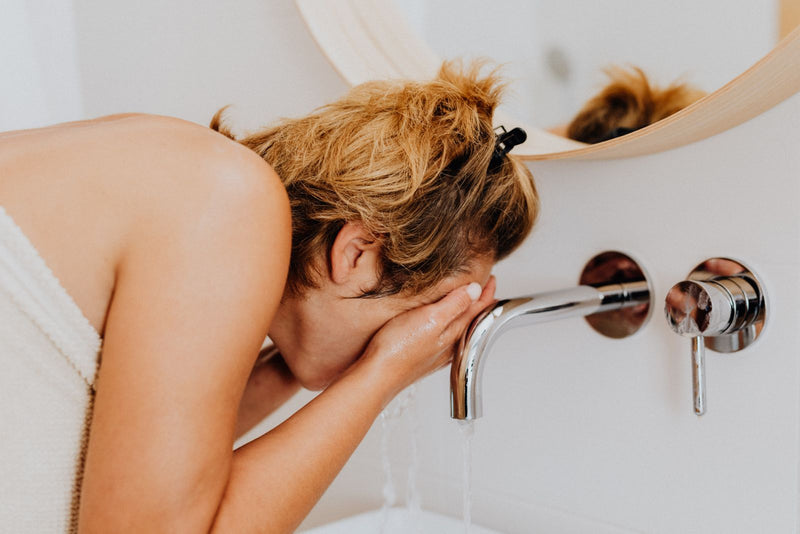
How to Choose a Face Wash for Your Skin Type
Cleanser is the step people get wrong most. How to pick one for your skin type, and why squeaky-clean is a warning sign.

Do You Need a Toner? An Honest Answer
Do you need a toner? For most people, no. What toner does, who benefits, and where your money is better spent.

Men's Skincare: A Simple Starter Routine for Pakistani Skin
A simple 3-step men's skincare routine for Pakistani skin: cleanse, moisturise and SPF 50 - about a minute a day.
ready when you are